
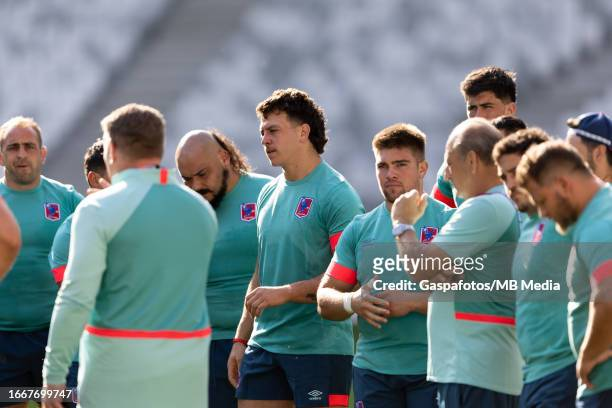
As Chile line up for their group game against England this Saturday, you may spy a man amongst their camp, who looks slightly incongruous. His paler skin, auburn hair and light blue eyes will set him apart from his swarthy counterparts. But in plotting how his new South American steeds will overcome the challenge of his country of birth, Dan Richmond will be as Latin as they come.
There is a Spanish phrase: ‘Al mal tiempo buena cara’. It means: to turn your face towards the bad weather. If things get tough, keep looking for the positives. And it was tough was for Richmond. English rugby’s squeeze on finances, the fallout from Covid and a difficult time at Cambridge had meant that his outlook was overcast. But an email from World Rugby meant there was a possible way through.
“I got a message in October from World Rugby asking me if I’d be interested in working with two South American teams. That was when they were having their tournament out in Romania. I had started with Argentina, workshopping some ideas with their guys as a consultant; that was my first introduction to it; I had coached Agustin Creevy at Worcester; that was the link for me. In Argentina, the hooker is referred to as the central prop and hooking isn’t something they looked to do at scrum time, and lineout throwing is just not one of their skill sets. These workshops led to conversations with Uruguay and Chile and I got the call last Autumn.”
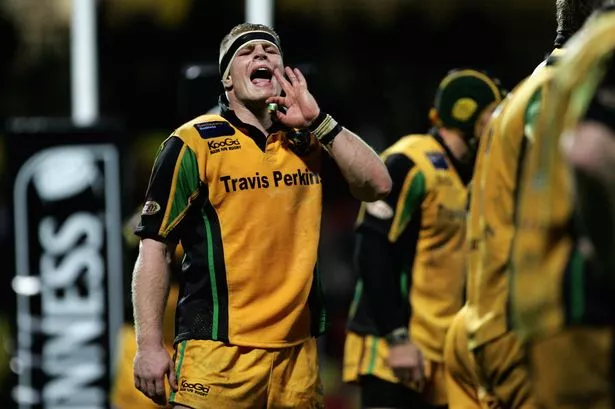
His job means a lot of travel. A fair amount of to-ing and fro-ing. We speak with Dan briefly back in the UK before joining back up with Chileans in France. Life is a little chaotic and we enjoy a Zoom call with Dan on his phone, sitting in a car park of Travis Perkins, just before he heads in to get some bits and pieces to complete some work on his house. There is a look of resignation as to just how frenetic things are, but also a huge sense of excitement and pride at such an exciting project like Chile.
“They are an expanding rugby nation. Speaking with Pablo (Lemoine), the head coach, we identified areas that I could help with; get them up to speed with modern techniques and strategies. World Rugby put together a program where I would go out and work with them; I have 70 days of contact time booked in at the moment, with potential extensions over the World Cup. I am responsible for the set piece elements, and while I’m not with them in person, I am still able to organise remote sessions, reviewing and overseeing the delivery of those. World Rugby have an obligation to support those Tier 2 teams and countries. With my specialism I became the choice they wanted, I suppose. I also have a job consulting with Italy. I am going to be flying out to Italy soon and they want me to work on some specific parts of their set piece. It’s busy; it’s going well!”
But working halfway around the world isn’t straightforward. Dan’s family are having to adjust to his transitory lifestyle.
“Before Covid, I was with Cambridge but also the lineout consultant with Bayonne. Even then, my wife and kids were getting used to being away for sections of time. But then when Covid hit we lost everything and had to reboot. And this will be a move hopefully back into full-time coaching. I have a very supportive family. There are upsides; I am away for blocks but when I’m home, I’m fully home. I take the kids to school, see a lot of them, working on the house, that sort of thing…” He casts a cursory eye out the window at the Building Supplies superstore that looms outside his window.
“In a way, it’s better. Previously, when I was working full time for a club I was leaving at 6.30am and rarely back before bedtime. I may be away for three to four weeks at a time now, but I am fully present for the three to four weeks that I am back home. It kinda works…”
As a player, Richmond started with Bath, then played 84 times for Northampton, before a move down the A428 to Goldington Road and Bedford. But it was at Saints, where his career developed and, unsurprisingly, one of the more formative impressions made on him as a young man was by Simon Hardy. The lineout specialist at the East Midlands club is mentioned in exalted terms by Steve Thompson, who heralds the coach as one of the reasons he is a World Cup winner. Hardy’s ability to get the best out of people sits at the heart of Richmond’s coaching ethos. After finishing playing he coached with Wasps, Worcester and Sale Sharks and was also with Argentina at the 2015 World Cup. He has spent a while fine-tuning his art but, interestingly, these more recent challenges have proven most beneficial.
“Coaching teams like Uruguay, Chile and Italy mean that language is a challenge. That’s improved me. Having to put across your ideas and techniques without using the normal words you rely on has made me a better coach. Their English is quite good but my Spanish and Italian aren’t much to write home about. You need to think around problems and the way you are putting something across. My communication skills with them aren’t reliant on language, there has to be more to it. And you have to be very clear and concise when putting things across. With a closed skill like lineout throwing, it can be beneficial: things get more complicated, the more information you give someone. So, just keeping it simple, and allowing the player to focus on one thing at a time can make things a lot easier. The less talking the better! It’s a real challenge and one that has made me a better coach.”
Chile are still transitioning to the fully professional world of rugby. Basic requirements like all the players being available, and timings on when coaches and players can get together is still sometimes missing. This also challenges Richmond to adapt the way he runs coaching.
“I’ve done a scrum session where there was no pushing! I’ve done a lineout session with no jumping! And that is brilliant; it really tests you. Think about that: you get approached just before the session and someone says ‘None of the second rows are allowed to jump.’ What do you do as a coach? Or ‘We’ve got to take the volume of impact down on the players but you still have to do your scrum session…’ These mean you have to think about things in different ways, really focus on areas of technique and understanding.”
And what about the nature of not being with the team all the time, having to come in once they’ve established the team – how do you manage that situation?
“Yeah, that is difficult. I’ve learnt to come back to a phrase that was given to me early on in my career. One that shows just how you need your mindset to be when working like this. ‘It’s about connection, rather than correction.’ You need to be patient. You can’t expect to flick switches in people; these things take time and sometimes there’s pressure on that. But you have to trust that getting to understand players, and building relationships, is more important than just telling them what to do. That is how you affect real change. It’s the same anywhere…”
“The modern generation of players comes with its own problems. I’m a bricklayer by trade, before I started to properly play rugby, and my dad was a bricklayer. If I had questions about bricklaying, I would go to him for the answer. There was a hierarchy in place because of this. But nowadays, players have so much information and knowledge at their fingertips, you have to frame what you’re saying in a way that they become receptive. You can’t just say you know something they don’t, because in a few clicks on their phone, they can find out what you know. The skill of a coach is to connect with players so they buy into you and what you have to give them. It’s about setting them challenges, creating ownership, and then collaborating to improve performance. You can’t just say ‘I’ve got 25 years experience, you’re going to do it the way I say…’, they won’t respond.”
And what about Chile? They have caused a real impression at this World Cup, what is it like inside the camp?
“The players are fantastic. It is difficult to put across just how enjoyable it is to work with them. The hard work that these guys put in is incredible; their day starts very early because of the heat. And then their sessions are back to back: they go, skills sessions, gym sessions, unit sessions, team sessions, then they get fed, recover for a bit, and then they all go off and study in the evenings. The facilities are passable; they aren’t all shiny and new; they do the job. But this creates a grit in these guys, a determination and hunger. South American people give you so much. They open their homes to you, look after you, and if you replicate that by sharing your knowledge, understanding and strategies with them, they just give you more and more. They’ve already made history, this group. That has been well documented. This competition is about measuring ourselves against the Tier 1 nations. The pack will be focused on their set piece and seeing how well what they’ve learnt goes against the likes of England. In some ways, we’ve already won. But we want to know how much further we can go. Everyone says ‘pressure is a privilege’, well this team have earned that privilege. And it’ll be about trying to enjoy that as much as possible.”
And so Chile will turn their faces towards England on Saturday afternoon and attempt to ride out the storm. Speaking to Dan, you get an overwhelming sense that all of their hard work and endeavour is starting to bear fruit and you hope that World Rugby can continue to support efforts like Chile’s, to help grow the sport and improve everyone’s appreciation of the game across the world. England will look to rain on their parade, but you’d be mean-spirited to begrudge Chile or Richmond their moment in the sun.


 Double Dummy Scissors